
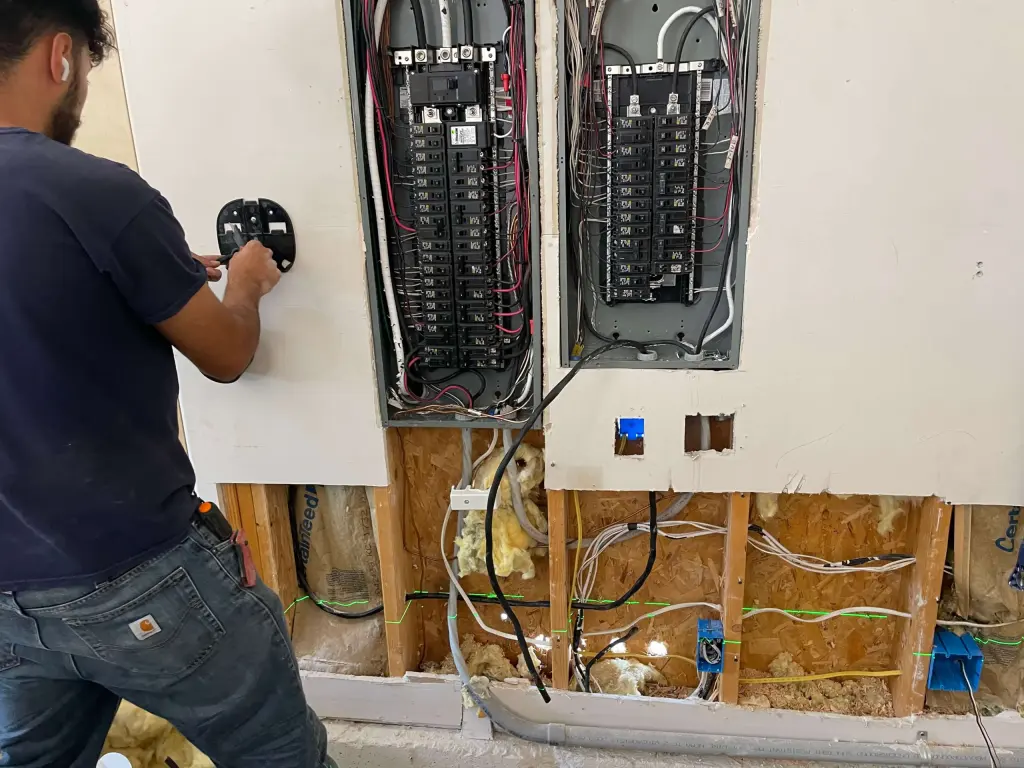
The safest way to run a generator during a winter outage is through a transfer switch or a panel interlock, installed with a permit, so your house can never send power back onto the utility lines. Extension cords work for a few plug-in appliances, but they can't run a hardwired furnace, and the shortcut some people try, a cord with plugs on both ends, can kill a lineworker.
Heavy snow, ice on lines and Front Range wind events can all cut power across the Denver metro in winter. When it's cold, the loads that matter are the ones that keep the house warm and dry: the furnace blower and igniter, the sump pump, the refrigerator, heat tape on pipes or gutters, and a well pump if you're out past the city water lines. A gas furnace still needs electricity to run. That's the part people forget until the house starts cooling down.
A backfeed cord is never an acceptable connection
Every legitimate method below shares one feature: it physically prevents the generator and the utility from feeding your wiring at the same time.
Four ways to connect a generator, compared
| Method | How it connects | What it can power | How switching works | Electrician and permit |
|---|---|---|---|---|
| Extension cords | Cords run from the generator's outlets to individual appliances | Plug-in items only: fridge, lamps, chargers | No switching; you move plugs | Not needed for the cords themselves |
| Manual transfer switch | Switch box wired beside the panel, fed from an outdoor power inlet | A set of circuits chosen at install, such as furnace, fridge, sump pump and some lights | Start the generator, then flip each circuit's switch to generator | Licensed electrician and permit |
| Interlock kit with power inlet | Sliding plate on the main panel, a dedicated generator breaker and an outdoor inlet | Any circuit in the panel, within the generator's capacity | Main off, slide the plate, generator breaker on, then pick circuits | Licensed electrician and permit; panel must accept a listed kit |
| Standby generator with automatic transfer switch | Permanent generator on natural gas or propane, wired to an automatic transfer switch | Selected circuits or the whole house, depending on size and load management | Automatic; starts and transfers on its own | Licensed electrician, electrical permit and gas permit |
Extension cords handle a fridge, not a furnace
Most furnaces are hardwired, so there's nothing to plug in. Converting one to a cord connection is not a homeowner project. If cords are your plan, use outdoor-rated cords heavy enough for the load and keep runs short. The generator stays outside, away from doors, windows and vents. The U.S. Consumer Product Safety Commission publishes placement guidance for portable generators, and carbon monoxide is the bigger risk here than the electrical side.
A manual transfer switch keeps it simple
Each protected circuit gets its own labeled switch. Nobody in the house has to remember which breakers to turn off first. The tradeoff is that only the circuits wired into the switch can run on generator power, so adding one later means another visit.
An interlock gives a portable generator the most reach
With an interlock you can power any circuit in the panel, as long as you stay within what the generator can deliver. You manage that yourself, which means leaving the range, dryer and other big loads off. The panel needs a kit listed by its manufacturer and an open space for the generator breaker, which has to be held in place with a retaining device. Older or full panels often can't take one, and that's when electrical panel upgrades become part of the project.
A standby generator works when nobody's home
The automatic transfer switch senses the outage, starts the generator and moves the load over without anyone touching it. Natural gas means no refueling in a long storm. These systems need a load calculation, placement that meets the manufacturer's clearances and local setback rules, and routine exercise and service.
Which setup fits your house
- If you only need cold food and charged phones for short outages
- Extension cords from a portable generator placed well outside the house are enough.
- If you own a portable generator and want heat, the sump pump and lights
- An interlock with a power inlet, if your panel accepts a listed kit. A manual transfer switch if it doesn't, or if you'd like clearly labeled switches.
- If your panel is full, obsolete or has no listed interlock
- Plan a panel replacement and install the interlock or transfer switch at the same time.
- If someone relies on powered medical equipment, or the house sits empty while you travel
- A standby generator with an automatic transfer switch, since it doesn't need anyone home to start it.
- If you manage rentals or a small commercial building
- An automatic system avoids asking tenants or staff to run a generator and switch circuits.
- If you don't know what size generator you need
- Get a load calculation before buying anything.
Size the generator to the loads you can't lose
Generators list running watts and starting watts. Motors, including the furnace blower, sump pump, well pump and refrigerator compressor, pull much more power for a moment when they start. Use the nameplate figures on your own equipment, not guesses. Start your list with:
- Furnace or boiler controls and blower
- Sump pump, especially under a finished basement
- Refrigerator and any chest freezer
- Heat tape protecting pipes or gutters
- Well pump, if you have one
- A few lighting circuits and the internet router
Get it installed before the first big storm
Permits and inspections take time, and nobody wants to schedule this work during an outage. If you're planning generator installation and service, fall is the time to start. Once it's in, run through a quick pre-winter routine:
- Test-run the generator outdoors and check its fuel and oil.
- Test smoke and carbon monoxide alarms on every level.
- Confirm your panel circuits are labeled clearly enough to read by flashlight.
- Store the generator cord dry and where you can reach it in the snow.
- Clear a path to where the generator will sit.
To talk through the right generator connection for your home or building, call Flowers Electric at 720-390-2077 or request a free estimate.