
A portable electric space heater on its high setting typically draws about 1,500 watts, which works out to roughly 12.5 amps on a standard 120-volt household circuit. That's most of what a 15-amp circuit can carry. It's why the first cold snap on the Front Range is also when breakers start tripping, outlets get warm and thin extension cords start to soften. The heater itself is rarely the whole problem. What it's plugged into usually is.
The National Fire Protection Association (NFPA) and the U.S. Consumer Product Safety Commission (CPSC) both track home heating fires, and both identify space heaters as a leading cause of the deadliest ones. Most of the habits that prevent those fires are simple and cost nothing.
A space heater is one of the heaviest loads in the house
Most things you plug in either cycle on and off or draw modest current. A space heater on high pulls a heavy, steady load for hours at a time. In many older Denver-area homes, a single 15-amp circuit feeds outlets in two or three rooms, so the heater is sharing capacity with a TV, lamps, chargers and whatever is plugged in on the other side of the wall.
Heat builds at the weak points: a worn outlet whose contacts no longer grip the plug tightly, a loose connection behind the receptacle, or an undersized extension cord. A plug that feels hot after an hour of use is telling you something.
Safe space heater habits for the whole season
- Plug the heater straight into a wall outlet. Not an extension cord, not a power strip. Heater manufacturers say this in their manuals, and the CPSC and NFPA give the same advice.
- Give it three feet of clear space. NFPA recommends keeping anything that can burn, including curtains, bedding, furniture, clothing and paper, at least three feet from the heater.
- Buy a heater with a tip-over switch and overheat shutoff. Look for a listing mark from a nationally recognized testing laboratory such as UL, Intertek (ETL) or CSA.
- Set it on a hard, level floor. Keep it off rugs, beds, chairs and tables where it can be knocked over or smothered.
- Turn it off when you leave the room or go to sleep. A heater running unattended overnight is the scenario fire officials warn about most.
- Run one heater per circuit. Check the labels in your breaker panel to see which rooms share a breaker, and don't put two heaters on the same one.
- Keep the cord in the open. Never route it under a rug or behind furniture, where heat can't escape and damage stays hidden.
- Check the plug and outlet after the first hour. A slightly warm cord is normal. A plug or faceplate that's hot to the touch is not.
- Keep heaters out of bathrooms and damp areas unless the unit is specifically rated for that location.
- Test your smoke alarms before heating season, and press the test button monthly through the winter.
What to plug where this winter
Winter adds a lot of plug-in loads at once: heaters, electric blankets, holiday lights, heat tape and engine block heaters. Here's how we'd sort them.
| Device | Plug it into | Avoid |
|---|---|---|
| Space heater | A wall outlet on a circuit with little else running | Extension cords, power strips, outlets where the plug fits loosely |
| Electric blanket or heated mattress pad | A wall outlet near the bed | Tucking the cord or controller under the mattress |
| Hair dryer, kettle, toaster oven | A wall outlet, not on the same circuit as a running heater | Power strips and light-duty cords |
| Indoor holiday lights | An indoor extension cord or power strip rated for the load | Connecting more strands than the manufacturer allows |
| Outdoor lights, heat tape, block heater | A GFCI-protected outdoor outlet using an outdoor-rated cord | Indoor cords used outside, cords pinched in doors or windows |
| TV, lamps, chargers | A power strip or surge protector | Sharing that strip with a heater |
Extension cords are for temporary, light loads
Every extension cord has a rating printed on the jacket or a tag, listed in amps or watts. Gauge matters too: the lower the number, the thicker the wire. The thin, light-duty cords sold for lamps and clocks are not built to carry a heater, and a heavier cord still adds connection points where heat can build.
Cold weather makes vinyl jackets stiff, and stiff jackets crack where they bend. Look cords over before you use them each season. Throw out any with cracked insulation, exposed wire, a bent or missing ground prong, or a plug that's discolored. Don't staple or nail cords in place, and don't plug one cord or power strip into another.
Warning signs that mean you should stop using that outlet
- If the breaker trips whenever the heater runs
- The circuit is overloaded. Move the heater to a different circuit or turn off other loads. If it still trips with little else running, have the circuit looked at.
- If the plug or cover plate is hot, discolored or the plug falls out easily
- The receptacle is likely worn. Stop using it. We'd replace a warm outlet instead of continuing to plug a heater into it.
- If you hear buzzing or crackling, or the lights dim when the heater cycles on
- That points to a loose connection or an overloaded circuit. Unplug the heater and schedule electrical repair services to find the cause.
- If you smell hot plastic or see smoke or scorch marks
- Unplug the heater if you can do it safely and switch off that breaker. If there's any flame or heavy smoke, get out and call 911. Once everyone is safe, a 24/7 emergency electrician can make the circuit safe.
- If you run a heater in the same room every day
- A dedicated circuit for that spot is worth considering, along with a look at whether your panel has capacity to spare.
A daily space heater can point to a wiring issue worth fixing
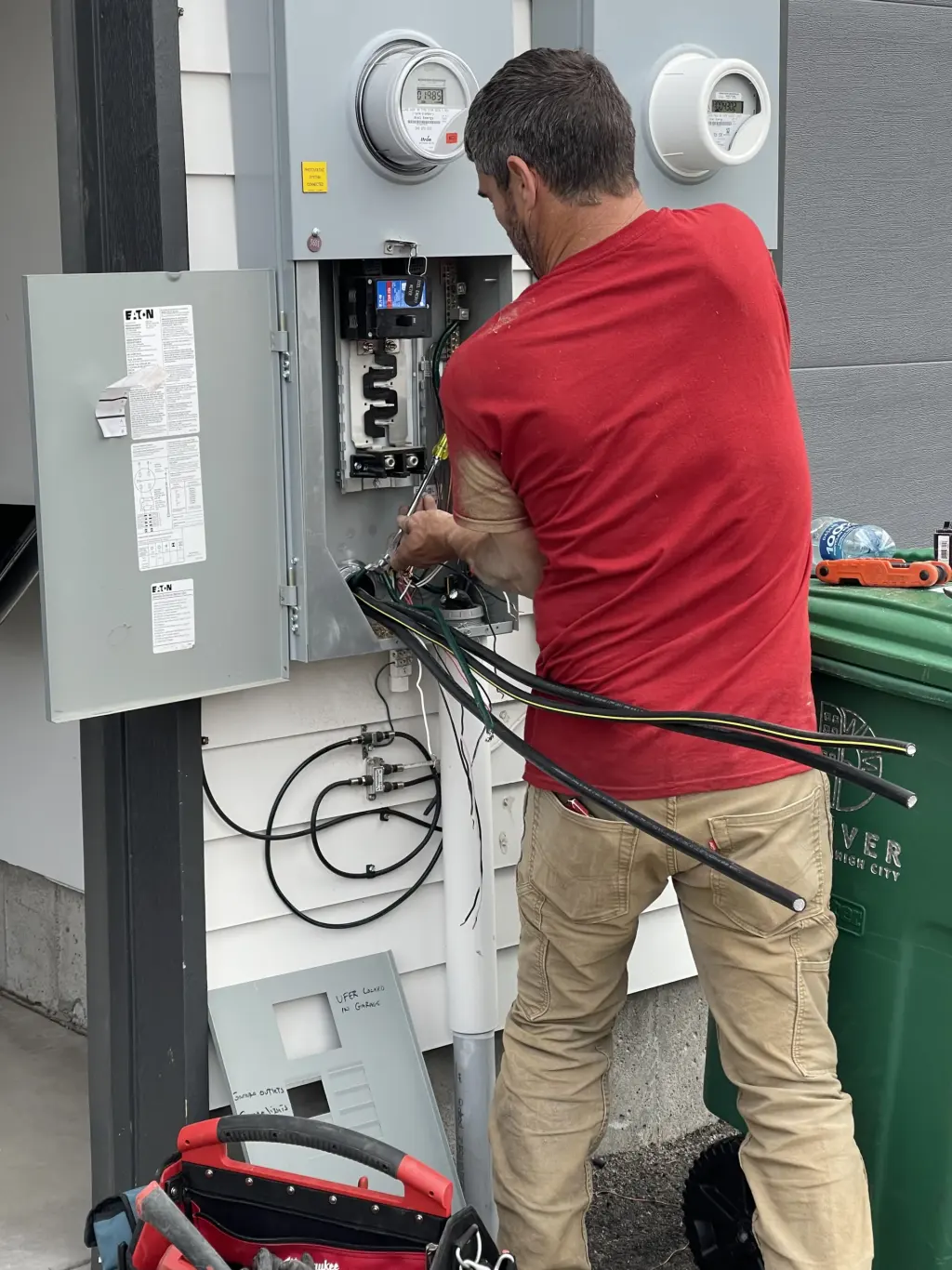
A heater that's needed every night in the same bedroom or home office is a steady load on wiring that may never have been designed for it. A licensed electrician can install a dedicated circuit, replace worn receptacles, or do an electrical safety inspection to check whether your panel and wiring are up to the winter loads you're adding. Any new circuit work needs a permit and inspection through your city or county.
If a heater keeps tripping a breaker or an outlet is running hot in your home or business, call Flowers Electric at 720-390-2077.